


Creating Summer Habitat for Bees, Butterflies & Birds
How to support pollinators and wildlife through the warmest months of the year
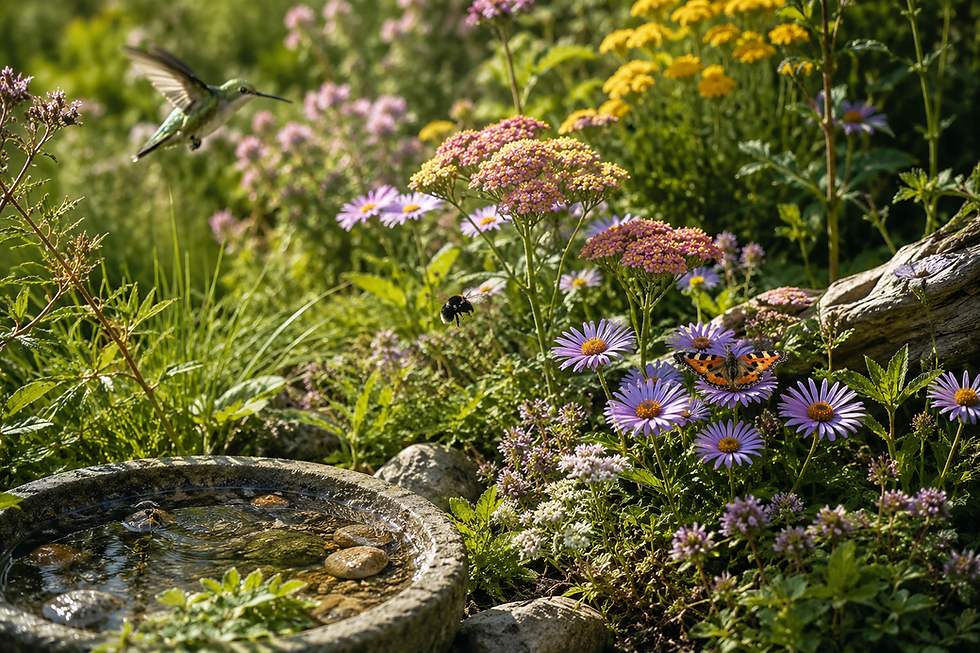
By mid-June, the garden is buzzing with activity.
Bees move from flower to flower collecting nectar. Butterflies drift through sunny borders. Hummingbirds dart between blooms, pausing only for a moment before disappearing into the greenery.
While spring often gets the attention, summer is when pollinators and birds rely most heavily on our gardens. Food sources can become scarce, temperatures rise, and access to water becomes increasingly important.
The good news is that a few thoughtful choices can transform your yard into a thriving summer habitat.
Here's how to create a garden that supports wildlife all season long.
Think Beyond Flowers
When people think of pollinator gardens, they often think of blooms.
Flowers are essential, but a healthy habitat provides more than nectar. Pollinators and birds also need shelter, water, and places to rest.
A truly wildlife-friendly garden offers:
Food throughout the season
Protection from heat and predators
Nesting and overwintering habitat
Access to clean water
The most successful native gardens balance all four.
Keep the Blooms Coming
Summer can be a challenging time for pollinators if early spring flowers have finished and little else is available.
Aim for a mix of native plants that bloom at different times throughout the growing season.
Some excellent summer performers include:
Yarrow
Nodding Onion
Douglas Aster
Self-Heal
Oceanspray
Kinnikinnick
A continuous supply of flowers means bees and butterflies can find food from spring well into fall.
Add Water for Wildlife
Just like us, pollinators need water during hot weather.
A simple water source can make a remarkable difference.
Try:
A shallow dish filled with clean water
Stones or pebbles for safe landing spots
A small bird bath
A naturally damp area in the garden
Refresh water regularly, especially during heat waves.
Even a modest water feature can quickly become one of the busiest spots in the garden.
Leave a Few Wild Corners
It can be tempting to tidy every part of the landscape.
Nature often prefers a little mess.
Leaving some areas less managed provides valuable shelter for wildlife.
Consider keeping:
Hollow stems
Small brush piles
Leaf litter beneath shrubs
Dense plant groupings
These spaces provide refuge from summer heat and protection from predators.
A healthy habitat doesn't need to look neglected. It simply needs room for nature to exist.
Create Layers in the Landscape
Wildlife thrives in gardens that offer a variety of heights and textures.
Think of your garden in layers:
Groundcovers that protect soil
Perennials that provide nectar
Shrubs that offer shelter
Trees that create shade and nesting opportunities
This layered approach mimics natural ecosystems and supports a greater diversity of species.
It also creates a richer, more visually interesting garden.
Skip the Chemicals
Pollinators are sensitive to pesticides and other synthetic treatments.
The healthiest gardens rely on biodiversity rather than chemical intervention.
Healthy soil, native plants, and a diversity of insects help create a balanced ecosystem where nature largely manages itself.
When beneficial insects have a place to live, many common garden problems become less severe.
Small Changes Add Up
You do not need a large property to support wildlife.
A few native plants, a small water source, and a corner left a little wild can have a meaningful impact.
Every flower planted, every pesticide avoided, and every habitat feature added helps strengthen the network of spaces that pollinators and birds depend on throughout the North Shore.
A Garden Full of Life
One of the greatest rewards of native gardening is not what you plant.
It is what arrives.
The hum of bees on a warm afternoon. The flash of a butterfly crossing the yard. The sight of a hummingbird returning to the same flowers day after day.
These small moments remind us that our gardens are part of something larger.
By creating habitat, we are not simply growing plants. We are creating places where life can flourish.
Prefer a Guided Starting Point?
If you're ready to create a pollinator-friendly garden but aren't sure where to begin, our DIY Pollinator Garden Plan is designed specifically for Lower Mainland gardens.
It includes:
Native plant recommendations
A simple garden layout
Guidance to help you plant with confidence
A great option for homeowners who want to build habitat at their own pace.
👉 Explore the DIY Pollinator Garden Plan
Need Help Bringing Your Garden to Life?
At Yard Surgeons, we design and maintain native landscapes that support biodiversity while remaining beautiful, functional, and easy to care for.
Whether you're adding a pollinator garden, improving habitat, or redesigning your outdoor space, we're here to help.
For more tips on creating a wildlife-friendly garden, visit yardsurgeons.ca.
604-351-3147 | @yard_surgeons


Comments