


How to Build a Pollinator-Friendly Native Garden This Spring
A simple guide to creating a yard that supports life and looks beautiful doing it

By May, the garden is fully awake.
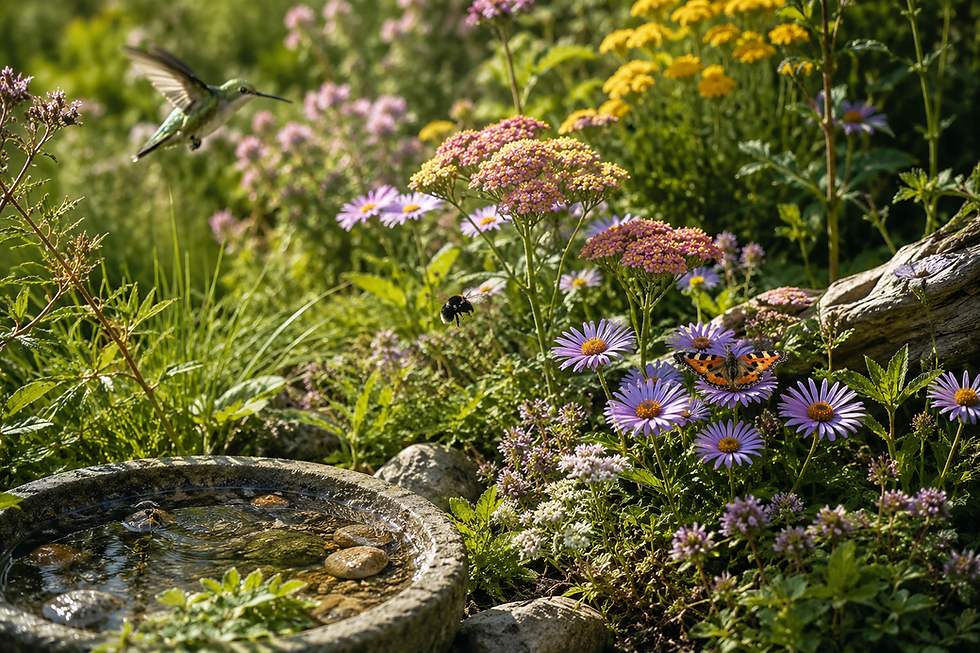
Bees are moving from flower to flower. Hummingbirds return to familiar feeding grounds. New growth fills in the spaces that felt quiet just weeks ago. It is one of the most active and important moments in the garden.
It is also the perfect time to ask a simple question.
Is your garden supporting the life around it?
A pollinator-friendly garden does not need to be complicated. With the right plants and a few thoughtful choices, your yard can become a place where bees, butterflies, and birds can feed, rest, and thrive.
Here is how to build one, the native plant way.
Start with Plants That Belong Here
The foundation of any pollinator garden is the plants themselves.
Native species have evolved alongside local pollinators. They provide the right kind of nectar, bloom at the right times, and require less water and maintenance once established.
Some of our North Shore favourites include:
Red-flowering Currant for early spring blooms
Oregon Grape for both flowers and structure
Red Columbine for hummingbirds
Salal for evergreen coverage and berries
Kinnikinnick for sunny groundcover
Sword Fern for year-round habitat
When you plant native, you are not just adding beauty. You are restoring part of the local ecosystem.
Plan for Continuous Bloom
Pollinators need food from early spring through late summer.
A strong garden offers a sequence of blooms, not just one moment of colour.
Think in layers:
Early bloomers to support emerging bees
Mid-season flowers for peak activity
Late bloomers to carry pollinators into fall
Even a small garden can provide this rhythm with a thoughtful mix of plants.
Create Shelter, Not Just Food
Flowers are only part of the story.
Pollinators also need safe places to rest, nest, and overwinter.
You can support this by:
Leaving some hollow stems in place
Keeping leaf litter under shrubs
Including dense plantings for cover
Adding a small brush pile or natural corner
A slightly “untidy” garden is often a healthy one.
Add a Simple Water Source
Pollinators need water, especially as the weather warms.
This does not need to be elaborate.
A shallow dish with stones, a small basin, or even a damp area of soil can provide what they need. The key is to keep it safe and accessible.
Plant in Layers
A thriving garden is not flat.
By layering plants at different heights, you create more space for life.
Think of:
Groundcovers like Kinnikinnick
Mid-height perennials like Columbine
Shrubs like Currant and Oregon Grape
Ferns and grasses for texture and shelter
This structure mimics natural ecosystems and supports a wider range of pollinators.
Start Small and Let It Grow
You do not need to transform your entire yard at once.
Start with one bed. One corner. Even a few containers.
As the season unfolds, you will notice more movement, more life, and more connection to your space.
That is how a pollinator garden begins.
A Garden That Gives Back
A pollinator-friendly garden is not just about helping bees and birds. It changes how your yard feels.
It becomes quieter, more alive, more connected to the landscape around you. It asks for less control and offers more in return.
In a place like the North Shore, where nature is always close, it is one of the most meaningful ways to garden.
Prefer to Start on Your Own?
If you’re feeling inspired but want to take a DIY approach, we’ve created a DIY Pollinator Garden Plan for part sun spaces in the Lower Mainland.
It includes:
Native plant recommendations
A simple layout to follow
Guidance to help you get started with confidence
It’s a great option for homeowners who want to build a pollinator-friendly garden at their own pace.
👉 Explore the DIY Pollinator Garden Plan
Ready for a Little More Help?
At Yard Surgeons, we design and maintain native landscapes that are built for beauty, biodiversity, and long-term health.
We are now booking Spring and Early Summer Planting & Design Consultations across North Vancouver and the North Shore.
Let’s create a garden that works with nature, not against it.
For more tips on creating a wildlife-friendly garden, visit yardsurgeons.ca.
604-351-3147 | @yard_surgeons

Comments